
Study index
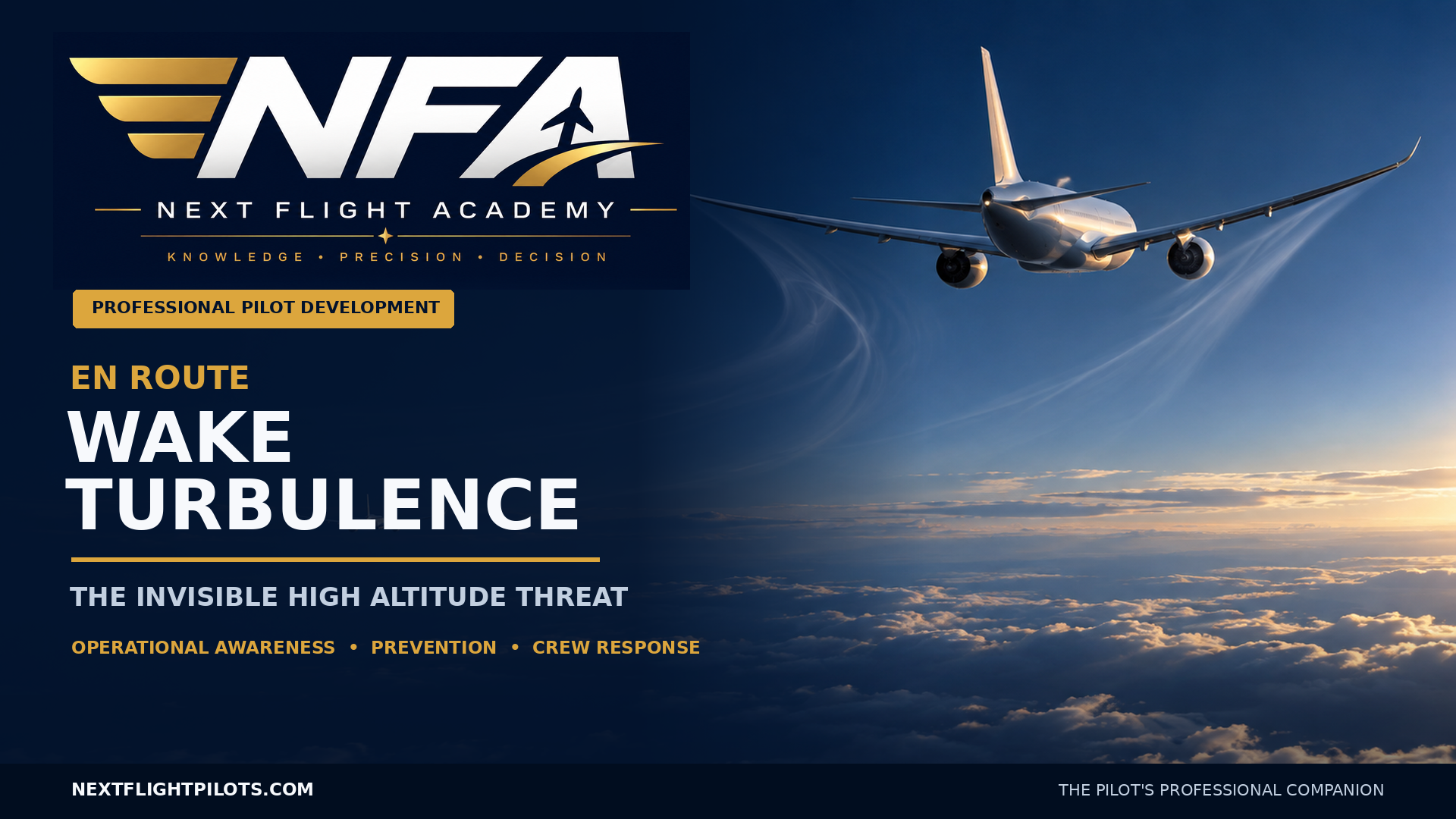
The invisible high altitude threat: understanding wake formation, three-dimensional traffic geometry, prevention, cabin protection and disciplined aircraft response.
01 — STUDY INTRODUCTION
Wake turbulence is not only an airport hazard
Every aircraft producing lift creates a pair of counter-rotating vortices. During cruise, that wake can descend and move with the surrounding air mass into the path of another aircraft operating on the same airway, crossing track or adjacent flight level.
The threat may appear in smooth, clear air without a weather-radar return. Regulatory separation protects aircraft from collision, but it does not create a physical boundary around a descending vortex.
02 — STUDY INTRODUCTION
Geometry matters more than one number
Distance alone cannot define wake exposure. Generator weight and configuration, elapsed time, relative altitude, track angle, wind, atmospheric stability and the encountering aircraft all shape the result.
The useful question is not only where the traffic is now. It is where the traffic flew, where its wake may have moved and where the following aircraft will be when those paths converge.
03 — STUDY INTRODUCTION
Prevention creates the strongest margin
The protected 15-chapter edition develops terminal and RVSM encounters, vortex persistence, traffic displays, ATC coordination, cabin protection, recognition, automation, UPRT principles, CRM, TEM and objective reporting.
If an encounter occurs, the generic priority is to protect the aircraft state with measured control, monitor automation and follow aircraft-specific guidance. Recovery skill supports safety; early awareness and avoidance remain the primary defenses.
NFA PROFESSIONAL
Continue with the full professional edition.
This page is a public introduction, not the complete member study.
Open member editionProfessional plan in preparation. Full-study language availability is separate from this introduction.Educational material. Not a replacement for manufacturer manuals, approved operator procedures, MEL/CDL, operational approvals, AIP/NOTAM or regulatory requirements.